There is a concept in yoga that does not get nearly enough airtime, and once you understand it, you will start to see it everywhere.
It is called santosha. And it simply means contentment.
It is often confused with happiness or gratitude, and both of those are part of it. But contentment goes a little deeper. Being okay with where you are, as you are, right now.
What Santosha Actually Means
Santosha is one of the niyamas, the personal observances that form part of the ethical foundation of yoga in Patanjali’s eight-limbed path. Translated from Sanskrit, it means a sense of ease and sufficiency with the present moment.
It is not about lowering your standards. It is not about pretending everything is fine when it is not. It is the ability to be at peace with your current reality while still moving forward.
That distinction matters.
Santosha and Ambition Can Coexist
Here is where people often get it wrong. They hear “contentment” and think it means settling. Giving up. Losing your drive.
It does not.
You can still want more. Build more. Create more. Santosha does not ask you to stop growing. It asks you to stop suffering in the gap between where you are and where you want to be.
Without santosha, ambition can tip into pressure. You are always chasing the next milestone, the next achievement, the next version of yourself, and never quite landing. You get there, and instead of feeling it, you are already looking ahead.
When you embody santosha, it creates a shift. You move forward with more ease. You grow without the constant feeling that you are behind or not doing enough.
Ambition gives you direction. Santosha gives you peace. You need both.
What It Looks Like in Practice
Santosha is not something you achieve once. It is something you come back to, again and again, in the small moments.
It is finishing your yoga practice and feeling good about showing up, even if it was not your best session. It is looking at where your business, your body, or your relationships are right now and finding something solid to stand on, even as you work toward more.
It is the difference between striving from a place of lack and growing from a place of wholeness.
On the mat, you start to notice it. When you stop comparing yourself to the person next to you. When you hold a pose with steadiness rather than forcing it further. When you breathe through discomfort instead of fighting it.
Off the mat, it looks like being present in your actual life rather than the one you are planning for.
Why We Think This Is One of the Most Important Principles to Teach
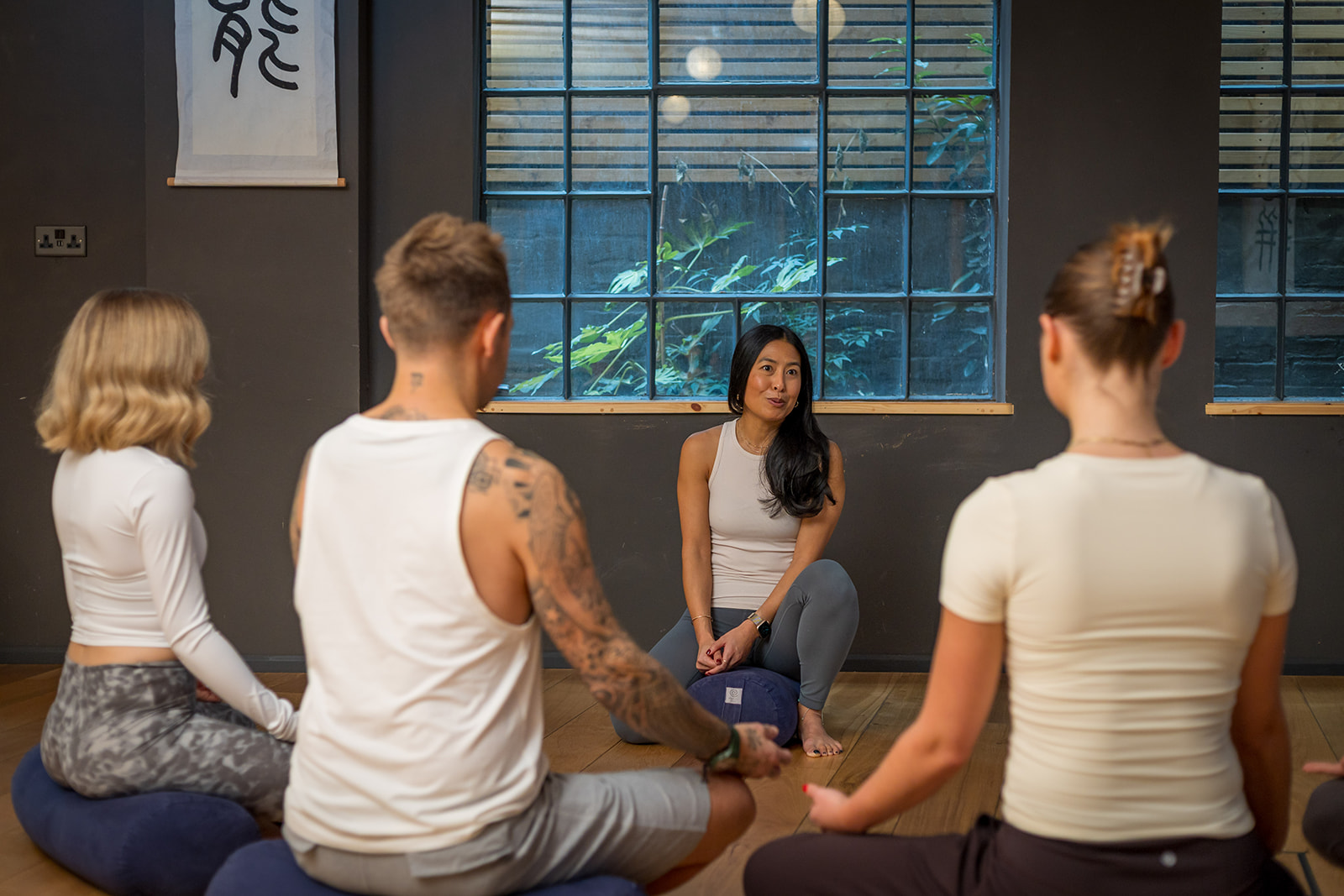
At The House of Yoga, santosha comes up a lot in our teacher training. Not because it is an easy concept to embody, but because it is one of the most transformative.
When students begin to practise it, they report feeling less reactive, less exhausted, and more grounded in their day-to-day life. The ambition does not go anywhere. It just becomes a cleaner, calmer energy.
And that is really the goal, in yoga and in life. Not to have everything figured out. Not to arrive at some perfect version of yourself. But to be fully present with who you are and where you are, while remaining open to where you are going.
That is santosha.
Curious about exploring yoga philosophy more deeply? Our 200hr Yoga Teacher Training covers the full eight-limbed path, including how to bring these principles into your own practice and your teaching. Our September intake is now open. Find out more here.